
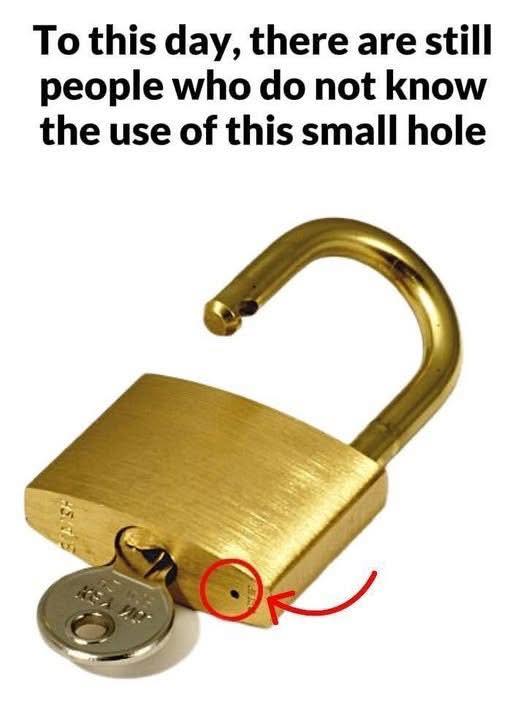
Padlocks are among the most familiar tools we use. They hang on gates, secure bicycles, lock storage units, and protect toolboxes — all with a simple, reliable design that hasn’t changed much over the years. Because they’re so common, most people never stop to examine them closely.
But if you take a moment to look at the bottom of a typical padlock, you’ll notice a tiny hole. It’s easy to overlook and even easier to dismiss as meaningless. In reality, that small opening serves several important purposes that help keep the lock functioning properly over time.
Protection Against Moisture and Rust
Padlocks are often used outdoors, where they are constantly exposed to rain, humidity, snow, and rapid temperature changes. Even high-quality metal locks are not completely immune to moisture. When water finds its way inside the lock body, it can lead to rust, corrosion, and internal damage — especially to the delicate springs and pins that allow the lock to open and close smoothly.
The small hole at the bottom acts as a drainage channel. Any moisture that enters the lock has a way to escape instead of becoming trapped inside. By allowing water to drain out naturally, the hole helps slow down corrosion and extends the life of the lock.
A Simple Way to Maintain Smooth Operation
Over time, padlocks can become stiff or difficult to turn. Dust, dirt, and grime can work their way inside, and cold weather can cause internal parts to seize slightly. This is where the hole serves a second, equally important role.
The opening allows lubricants — such as graphite powder or lock oil — to reach the internal mechanisms. A small amount applied through the hole can loosen stuck components, reduce friction, and restore smooth movement. This is why even many modern, weather-resistant padlocks still include the feature.
Pressure Relief and Backup Protection
In addition to drainage and lubrication, the hole can also help relieve internal pressure caused by temperature changes. As metal expands and contracts with heat and cold, pressure can build inside sealed spaces. The opening provides a simple way to equalize that pressure, reducing strain on the lock’s internal parts.
Even padlocks designed with advanced coatings and seals often retain this small hole as a backup safeguard — a simple solution that works reliably without adding complexity.
A Reminder of Thoughtful Everyday Design
This tiny detail is a perfect example of how good engineering often goes unnoticed. The hole doesn’t make the lock look better, nor does it draw attention to itself. Yet it quietly improves durability, reliability, and ease of maintenance.
Padlocks aren’t the only everyday objects designed this way. From arrows on fuel gauges that indicate which side the gas tank is on, to antimicrobial door handles in public spaces, thoughtful design choices are everywhere — quietly making daily life safer and more convenient.
So the next time you unlock a gate or secure a bike, take a second look at that small hole at the bottom of the padlock. It’s a reminder that sometimes the most important features are the ones we almost never notice.