
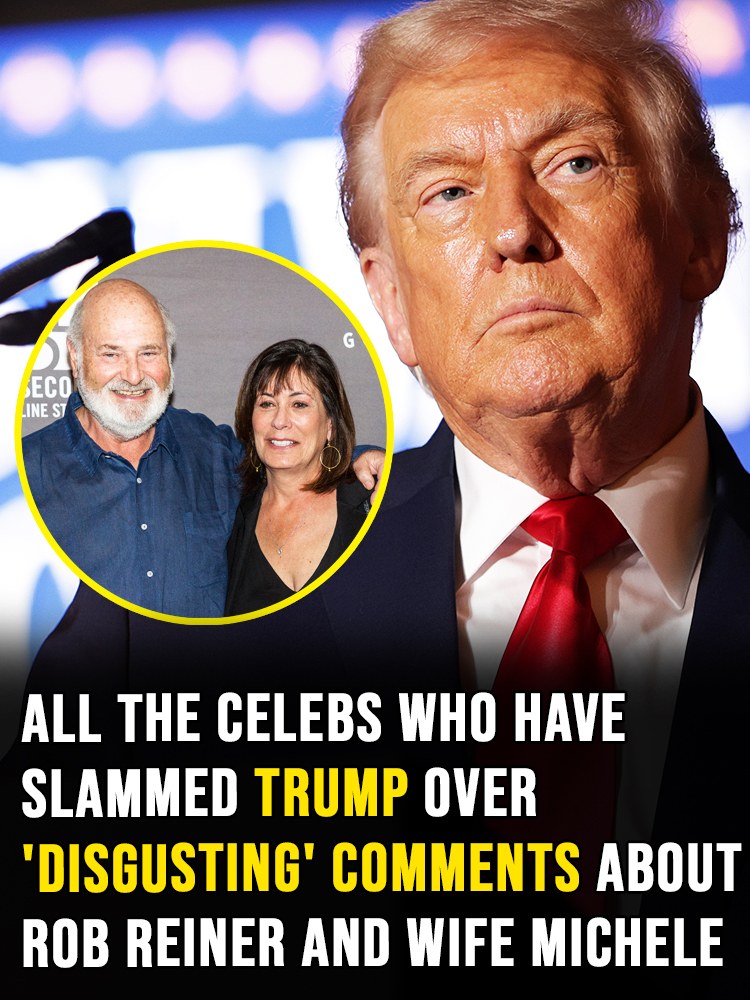
The words were brutal. A legendary director was dead, his wife murdered, his son accused—and the president chose that moment to mock him. Allies winced. Enemies erupted. Social media detonated in real time. As celebrities lined up to condemn Donald Trump’s statement, one question cut through the noise: how low can a leader g In the aftermath of Rob and Michele Reiner’s shocking deaths, the world expected solemnity, or at least restraint. Instead, Donald Trump framed Reiner’s murder through the lens of “Trump Derangement Syndrome,” turning a family tragedy into a political punchline. His words, delivered first on Truth Social and then repeated to the press, felt to many like an attack on the dead rather than any kind of presidential reflection.
The backlash was immediate and unusually unified. Patrick Schwarzenegger called the statement “disgusting and vile.” Piers Morgan urged Trump to delete it. Whoopi Goldberg openly questioned whether the president had any shame left, while Jimmy Kimmel lamented the absence of empathy and leadership at a moment when grief, not point-scoring, should have been the priority. In a country already exhausted by outrage, this episode forced a raw, uncomfortable reckoning with what people now expect—or no longer expect—from those in power.