
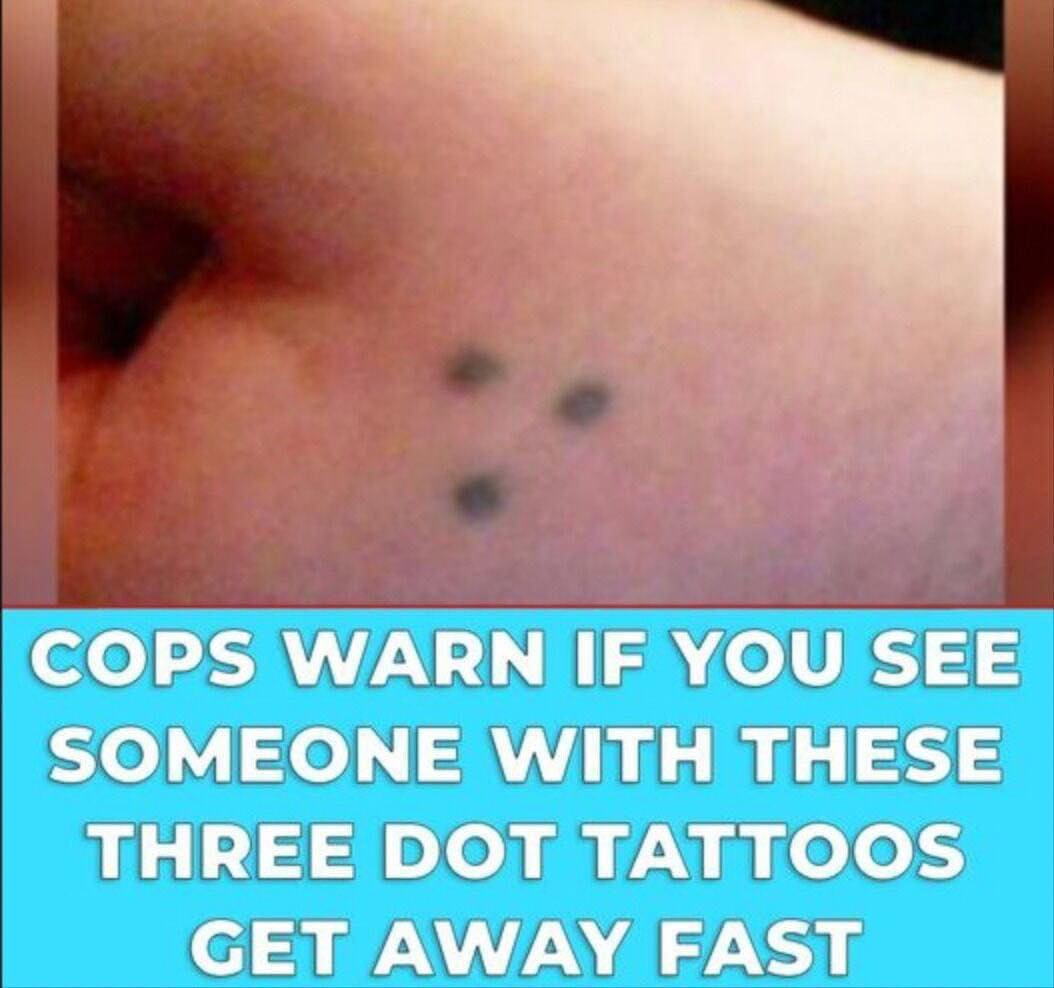
For many years, a small tattoo made of three dots arranged in a triangle has been surrounded by rumors and exaggerated claims online. Viral posts and warning messages have often portrayed it as a dangerous symbol or an automatic sign of criminal behavior. In reality, the story behind this tattoo is far more nuanced. Commonly associated with the phrase “mi vida loca,” which translates to “my crazy life,” the symbol does have historical roots in certain subcultures, but those origins do not define everyone who wears it today. Like many symbols, its meaning has evolved over time and varies widely depending on personal background, culture, and intent.
Historically, the three-dot tattoo appeared among some individuals who had lived through hardship, instability, or rebellion against social norms. In certain communities, it served as a personal marker of survival through difficult circumstances rather than a literal statement about crime or violence. Even within those early contexts, the symbol was never a universal label. People adopted it for different reasons, and it was not a reliable or consistent indicator of behavior. Over the years, online discussions often simplified this history, turning a complex symbol into a one-dimensional warning sign, which has contributed to misunderstanding and unnecessary fear.
As tattoos became more mainstream, the three-dot design spread far beyond its original environments. Many people chose it simply because they appreciated its minimalist appearance or abstract meaning. Others saw it as a reminder of personal growth, emotional resilience, or intense life chapters they had overcome. Some individuals got the tattoo without any awareness of its past associations, viewing it purely as a design choice rather than a statement. In modern society, tattoos are often deeply personal, and their meanings are shaped more by individual experience than by outdated stereotypes or internet rumors.
Because of this, professionals who work in public safety or community outreach emphasize context over assumptions. A single tattoo, especially a simple one, does not provide enough information to define a person’s character or intentions. Making quick judgments based on appearance alone can lead to unfair conclusions and missed understanding. Symbols change meaning across cultures and generations, and what once carried a specific message may now represent something entirely different. A thoughtful approach—one that values awareness, context, and open-mindedness—helps replace fear with understanding. In everyday life, it’s wise to stay observant and trust your instincts, but it’s just as important to remember that tattoos, like people, often tell deeper and more personal stories than they first appear to reveal.