
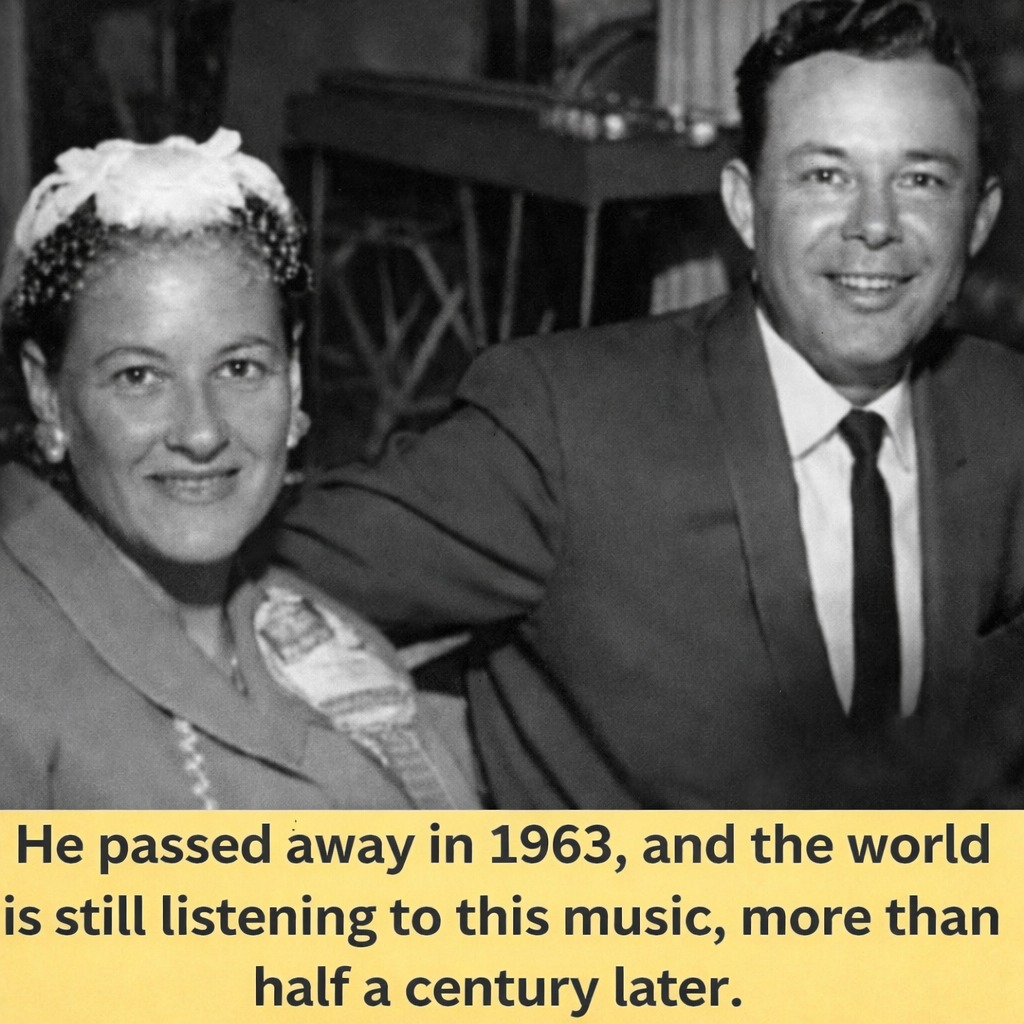
A quiet phone call in a smoky bar turned into a song that rewrote country music history. One overheard sentence. One fragile voice on the line. From that moment, a new sound was born—smooth, aching, unforgettable. It crossed charts, broke hearts, and outlived its singer.
It began with a man on a bar phone, speaking softly into the receiver, trying to reach someone who clearly meant everything to him. Joe and Audrey Allison caught that fragile moment and turned it into lyrics that felt like a private confession, yet somehow belonged to everyone. Producer Chet Atkins framed those words with gentle guitars and restrained orchestration, letting the ache breathe instead of drowning it in flash.
Then Jim Reeves stepped up to the microphone. His velvet baritone didn’t just sing the song; it inhabited it, turning longing into something almost sacred. When “He’ll Have to Go” climbed from the country charts into the pop world, it quietly redrew the boundaries of both. Even after Reeves’s tragic death, the record kept spinning—on radios, in films, in late-night memories—carrying that one vulnerable phone call into eternity.