
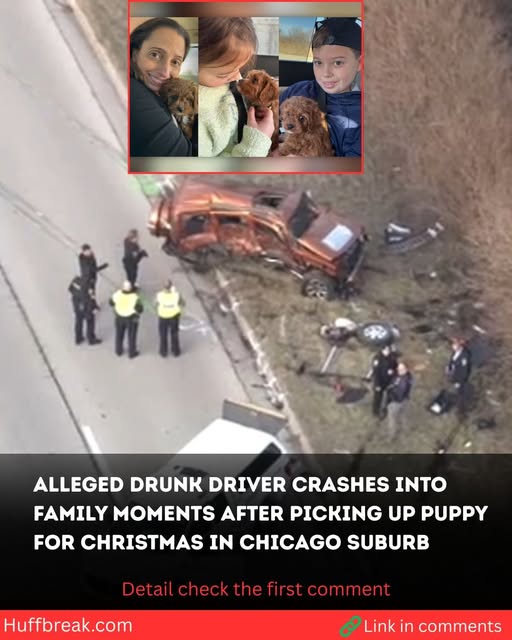
What began as a simple Christmas errand unraveled in seconds. A new puppy nestled in the backseat. Two children smiling, already imagining names and routines. A family driving home with the quiet joy of something promised and new. Then, without warning, metal collided with metal, lanes disappeared, and the ordinary logic of the road dissolved into noise, smoke, and fear.
According to investigators, the crash was sudden and violent. A Hummer attempted to pass traffic, clipped another vehicle, crossed into oncoming lanes, and struck the family’s SUV head-on. Prosecutors later stated that the driver, 27-year-old Jaquelin Onofre Reyes, had a blood alcohol level nearly three times the legal limit. In an instant, celebration turned into survival.
Ten-year-old Brady was pulled from the wreckage drifting in and out of consciousness. His mother called his name again and again, waiting for any sign that he could hear her. Emergency responders worked quickly, and he was rushed to one hospital, then transferred to another for additional surgery. The puppy—confused, shaken, alive—was carried away by a stranger who stopped without hesitation.
Among those who ran toward the wreck was Andrew Anderson, a former firefighter who saw smoke rising and chose action over instinct. He helped stabilize Brady while others tended to the scene, the kind of quiet courage that rarely makes headlines but holds moments together when everything threatens to come apart.
In the days that followed, the family’s world narrowed to hospital rooms, updates measured in inches of progress, and the long wait that accompanies trauma. The children continue to heal. The puppy recovers at a veterinary clinic. Life moves forward, but unevenly, with pauses where joy used to sit easily.
The legal process, however, has added another layer of pain. Reyes was released on electronic monitoring, with a court date set for January 20. For the family, the decision landed heavily—not as a legal argument, but as an emotional shock. Justice, when delayed or distant, can feel like another kind of injury.
This is not only a story about reckless driving or court proceedings. It is about how fragile ordinary happiness can be, and how quickly one person’s choice can fracture multiple lives. It is about strangers who step forward without being asked, and families who must find strength where none was planned.
A Christmas promise was broken on that road. What remains is the slow work of healing, the hope for accountability, and the quiet resolve to hold onto life—even after it has shown how suddenly it can change.