
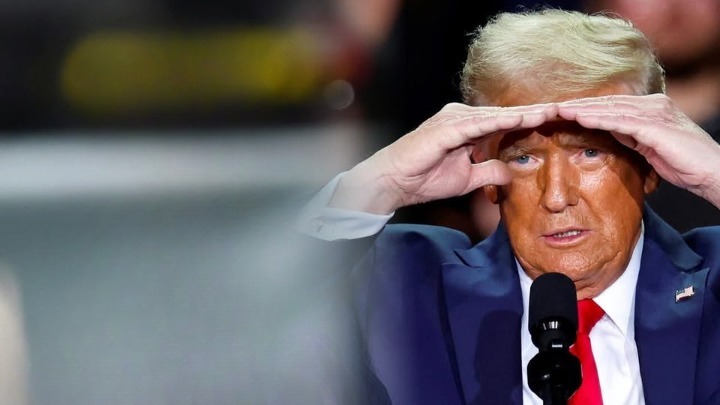
On a Saturday that will likely be studied by historians for decades, the geopolitical landscape of the Middle East underwent a fundamental transformation. President Donald J. Trump, in his second term, announced via Truth Social that the United States had conducted a “very successful attack” on three pivotal nuclear sites within the Islamic Republic of Iran. Among the targets was the Fordo Fuel Enrichment Plant—a facility buried deep within a mountain, long considered the crown jewel of Iran’s nuclear ambitions.
The announcement, punctuated by the President’s signature use of emphasis—calling it an “HISTORIC MOMENT FOR THE UNITED STATES OF AMERICA, ISRAEL, AND THE WORLD”—has sent shockwaves through diplomatic circles, triggered emergency sessions at the United Nations, and raised the specter of a regional conflict without modern precedent.
Chapter I: The Targeted Sites and the Strategic Calculus
The decision to strike Fordo represents a significant departure from previous administrations’ policies of containment and cyber-warfare. Fordo is unique; its location, bored into a mountain near the city of Qom, was designed specifically to be impervious to conventional aerial bombardment.
The Importance of Fordo
The Fordo facility has been a point of contention since its existence was revealed in 2009. Unlike the Natanz facility, Fordo’s smaller size and hardened status suggested to Western intelligence that it was intended for the production of highly enriched uranium (HEU), which is essential for nuclear weaponry. By targeting this site, the U.S. administration signaled a shift from “managed tension” to “preventative neutralization.”
Chapter II: The Rhetoric of Resolve vs. The Language of Sovereignty
President Trump’s framing of the event as an opportunity for Iran to “agree to end this war” suggests a strategy of maximum pressure taken to its ultimate physical conclusion. The administration’s goal appears to be the forced renegotiation of regional dynamics by removing the nuclear “shield” Iran has been accused of developing.
The Iranian Response: “Reserving All Options”
The reaction from Tehran was swift and pointed. Foreign Minister Abbas Araghchi, speaking via social media and official state channels, condemned the action as “lawless and criminal behavior.”
Araghchi’s invocation of the UN Charter—specifically the provisions regarding self-defense—highlights the legal battlefield that will now accompany the physical one. Under Article 51 of the UN Charter, a nation has the inherent right to self-defense if an armed attack occurs. Iran’s insistence that it “reserves all options” serves as a diplomatic warning of potential asymmetric retaliation, which could range from maritime disruptions in the Strait of Hormuz to proxy engagements across the Levant.
Chapter III: The Mexican Position and the “Non-Interference” Doctrine
In a notable turn, the Mexican administration offered a response rooted in its traditional “Estrada Doctrine”—a policy of non-intervention in the internal affairs of other sovereign states. The Mexican President stated that while the situation is grave, Mexico’s priority remains the stability of the global economy and the protection of its own citizens abroad.
Mexico’s stance reflects a broader sentiment among middle-power nations: a fear that a total collapse of U.S.-Iran relations will lead to a global energy crisis. As a significant oil producer, Mexico views the potential for a “Middle East fire” with a mixture of economic caution and diplomatic distance.
Chapter IV: Global Market Reactions and Economic Volatility
The immediate aftermath of the announcement saw a surge in Brent Crude prices. Markets detest uncertainty, and the targeting of a sovereign nation’s hardened military/industrial sites is the ultimate uncertainty.
The “Energy Tax” of Conflict
Economic analysts suggest that if Iran follows through with threats to disrupt shipping lanes, the world could see:
Oil Price Spikes: Potential increases of $20–$40 per barrel in the short term.
Insurance Premium Hikes: Maritime insurance for tankers in the Gulf could become prohibitively expensive, rerouting global trade around the Cape of Good Hope.
Inflationary Pressures: A secondary wave of inflation impacting transportation and manufacturing costs globally.
Chapter V: The Role of the International Atomic Energy Agency (IAEA)
The strike puts the IAEA in a nearly impossible position. As the body responsible for monitoring Iranian compliance with previous agreements, the IAEA must now determine if the strikes caused environmental hazards or if the destruction of monitoring equipment has permanently blinded the international community to Iran’s remaining capabilities.
The “outrageous” nature of the events, as described by Araghchi, suggests that the era of international inspections may be over, replaced by a new era of “kinetic oversight.”
Chapter VI: The Road to the UN Security Council
As world leaders from the European Union, China, and Russia call for “utmost restraint,” the focus shifts to the UN Security Council in New York. The divide is clear:
The U.S. and Allies: Viewing the strike as a necessary measure to prevent a nuclear-armed Iran and bring a decisive end to regional instability.
Russia and China: Likely to view the strike as a violation of sovereignty that undermines the rules-based international order.
Conclusion: A World Realigned
The strikes of 2026 have removed the ambiguity that defined the last decade of Middle Eastern diplomacy. By targeting Fordo, the United States has moved the “red line” from a theoretical boundary to a physical reality. Whether this leads to the “HISTORIC” peace envisioned by the President or a cycle of “everlasting consequences” as warned by Araghchi remains the most pressing question for the global community.
The silence that followed the initial reports has been replaced by a cacophony of diplomatic maneuvering. In the coming weeks, the world will watch to see if the “options” reserved by Iran are exercised in the shadows or on the open stage of conflict.