
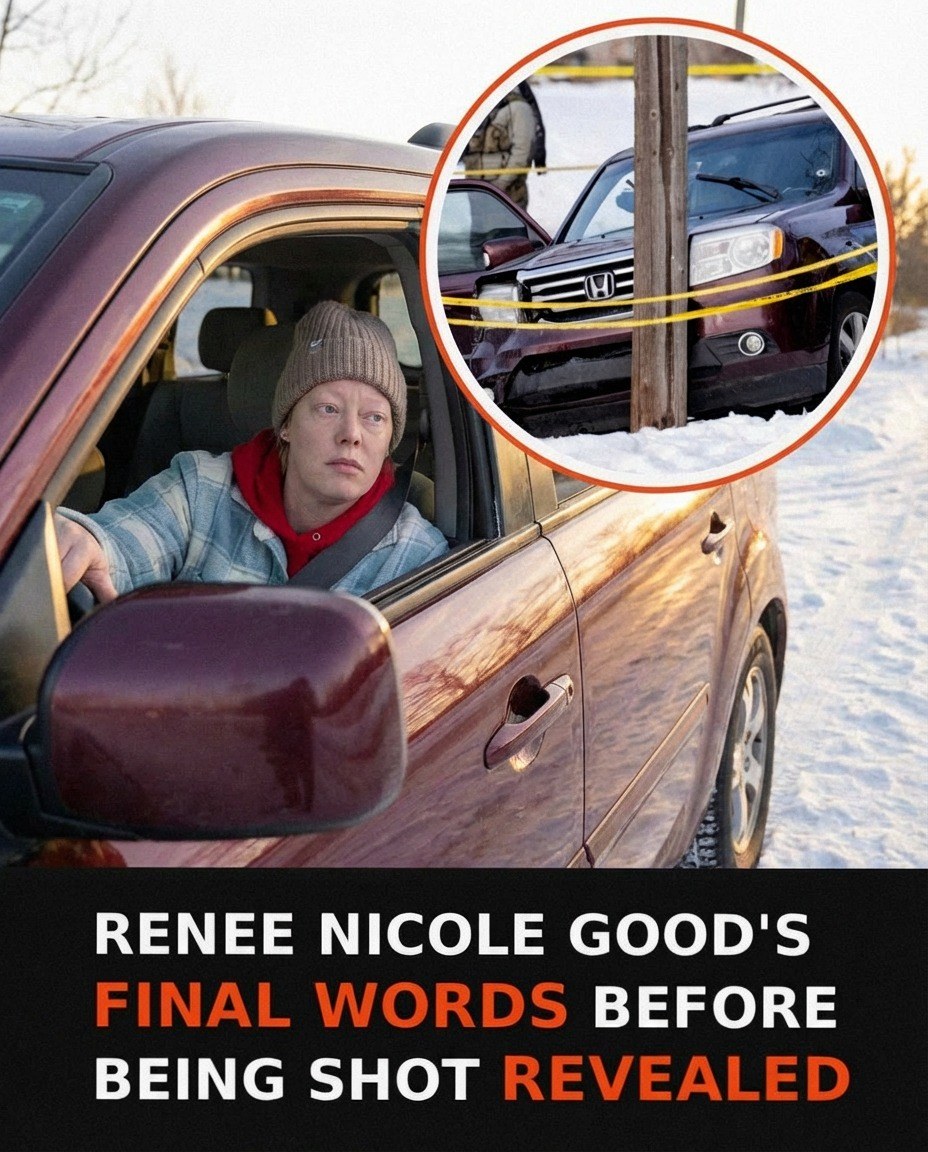
A newly released video has brought renewed national attention to the fatal encounter between federal immigration agents and Renee Good, capturing the tense seconds that preceded her death on a residential street in Minneapolis. The footage, filmed from the perspective of a federal agent, documents an interaction that initially appears routine and non-threatening but rapidly escalates into violence, leaving a woman dead and a community demanding answers.
The short video, obtained and released by a local news outlet, begins during what officials described as an immigration enforcement operation in south Minneapolis. Agents approach a parked SUV where Good is seated. The tone of the exchange, at least at first, is calm. Good speaks evenly and appears cooperative, while her wife, Becca, stands nearby recording the encounter on her phone. At one point, Becca attempts to defuse the tension with light humor, suggesting there is no immediate sense of danger or hostility.
That sense of relative calm makes what follows especially jarring. An agent orders Good to step out of the vehicle. Within moments, the situation shifts. The SUV is seen reversing briefly, then moving forward. Almost immediately, gunshots are heard. The video abruptly ends, leaving viewers with unanswered questions about what happened in the seconds that were not captured on camera.
Additional videos that later surfaced online show the SUV traveling several blocks before coming to a stop. Emergency responders arrived shortly afterward, and Good was transported to a nearby hospital, where she was pronounced dead. Federal authorities later confirmed that an agent fired the shots, stating that he believed his life was in imminent danger and acted in self-defense during what they described as a rapidly evolving and unpredictable encounter.
The agent involved has been placed on administrative leave, a standard procedure following officer-involved shootings. Federal officials emphasized that this step does not imply wrongdoing but allows investigators to conduct a thorough review without interference. The investigation includes internal reviews as well as oversight by external agencies to determine whether the use of force complied with federal policy and the law.
Despite those assurances, the release of the video has intensified public scrutiny and skepticism. Many viewers have questioned how an interaction that appeared controlled and conversational could escalate to lethal force in such a short span of time. Civil rights advocates and legal analysts have pointed to the absence of visible aggression in the initial moments, arguing that the footage raises serious concerns about judgment, de-escalation, and proportionality.
Eyewitnesses who were near the scene echoed those concerns in interviews with local media. Several described the encounter as confusing and chaotic, with commands being issued quickly and little time for clarification. Some said they did not immediately realize what was happening until they heard gunfire. Their accounts have complicated the official narrative and added urgency to calls for transparency.
The incident has also reignited long-standing tensions surrounding the operations of U.S. Immigration and Customs Enforcement, commonly known as ICE, particularly in cities that have openly questioned or limited cooperation with federal immigration enforcement. Minneapolis, like many large urban centers, has been the site of ongoing debates over the role of federal agents in local communities and the impact of enforcement actions on public trust.
In the days following Good’s death, protests erupted across the city. Demonstrators gathered near the site of the shooting and outside government buildings, calling for accountability and an independent investigation. Many carried signs bearing Good’s name, while others demanded broader reforms to immigration enforcement practices. Community leaders urged calm but acknowledged the deep anger and grief felt by residents.
Family members described Good as a devoted partner and a person who did not pose a threat. In public statements, they expressed disbelief that a routine interaction could end so tragically. They have called for the full release of all available footage, including body-worn cameras and surveillance recordings, to provide a clearer picture of what occurred.
Legal experts note that cases involving federal agents can be particularly complex due to overlapping jurisdictions and layers of oversight. Federal standards for use of force differ in some respects from local law enforcement policies, and investigations often involve multiple agencies. That complexity, critics argue, can delay accountability and erode public confidence if transparency is not prioritized.
The video itself has become a focal point of the broader conversation. Analysts have scrutinized frame-by-frame details, examining body language, tone of voice, and the timing of commands. While officials maintain that the agent perceived an immediate threat when the vehicle moved, others argue that the footage does not clearly show intent to harm, underscoring the difficulty of interpreting split-second decisions after the fact.
Supporters of law enforcement caution against drawing conclusions before investigations are complete, emphasizing the dangers agents face during enforcement operations. They argue that vehicles can be deadly weapons and that officers must make rapid decisions to protect themselves and others. Still, even some within law enforcement circles have acknowledged that the video raises difficult questions about communication and escalation.
Beyond the specifics of this case, the incident has fed into a national reckoning over policing, use of force, and the role of federal agencies in civilian spaces. It has also highlighted the human cost of enforcement actions, reminding the public that decisions made in seconds can have irreversible consequences for families and communities.
As investigations continue, federal officials have promised to release additional information when possible. State authorities have also indicated they are monitoring the case closely, given its implications for public safety and civil rights. Meanwhile, community organizations are offering counseling and support services to those affected, while advocacy groups are pressing for policy changes.
The release of the video has ensured that Renee Good’s death will not fade quietly from public view. Instead, it has become part of a larger, unresolved conversation about authority, accountability, and the fragile line between routine enforcement and tragedy. For many, the footage is not just evidence in an investigation but a stark reminder of how quickly ordinary moments can turn fatal.
As the case moves forward, the focus remains on uncovering the full truth of what happened on that Minneapolis street. For Good’s family, the priority is justice and clarity. For the community, it is reassurance that such an outcome will not be repeated. And for the nation, the video stands as another urgent call to examine how power is exercised, how force is justified, and how lives are forever altered when encounters spiral out of control in a matter of seconds.