
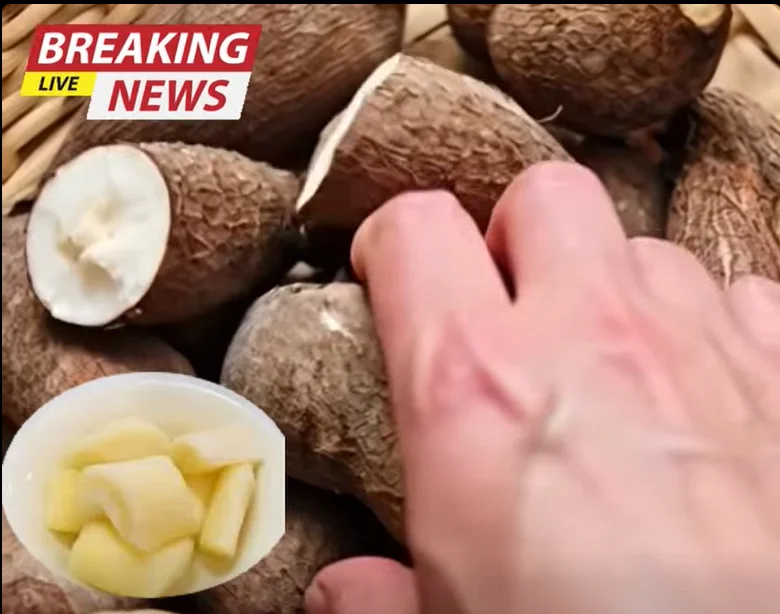
I eat it too 😨 Over 200 People Are Killed By The “World’s Deadliest Food” Every Year, But Almost 500 Million People Still Eat It
It may sound shocking, but cassava (also known as manioc or yuca)—a staple food for hundreds of millions of people worldwide—is often referred to as “the world’s deadliest food.” Every year, more than 200 people die from cassava-related poisoning, yet nearly 500 million people continue to eat it daily.
Why Can Cassava Be So Dangerous?
Cassava roots, especially bitter cassava varieties, naturally contain compounds called cyanogenic glycosides. When cassava is eaten raw or processed incorrectly, these compounds can release hydrogen cyanide, a highly toxic substance that interferes with the body’s ability to use oxygen.
In areas facing food shortages, people may rush preparation or consume cassava without proper processing—significantly increasing the risk of acute cyanide poisoning.
Cyanide poisoning from cassava can occur quickly and may include:
Nausea and vomiting
Severe headache and dizziness
Difficulty breathing
Rapid heartbeat
Seizures and loss of consciousness
In severe cases, deathChildren, pregnant women, and malnourished individuals are particularly vulnerable because their bodies are less able to detoxify cyanide.f It’s So Dangerous, Why Do So Many People Eat It?
Despite the risks, cassava remains a critical food source for millions because:
It is inexpensive and easy to grow
It survives drought and poor soil
It provides a large amount of carbohydrates and energyWhen processed correctly, cassava is safe to eat and can be an important part of a balanced diet.
How to Prepare Cassava Safely
To reduce the risk of poisoning, cassava must be handled with care:Peel thoroughly, removing both the outer brown skin and the inner pinkish layer
Soak the roots in water for many hours or overnightCook completely by boiling, steaming, or fermenting
Never consume raw or undercooked cassava
Discard cooking water—do not reuse it
Avoid bitter cassava unless you are trained in proper preparation methodsTraditional techniques such as fermentation, drying, and prolonged cooking are highly effective at reducing cyanide levels.Long-Term Health Risks
Regular consumption of poorly processed cassava can also lead to chronic health problems, including:
Konzo, a neurological disorder causing irreversible paralysis