
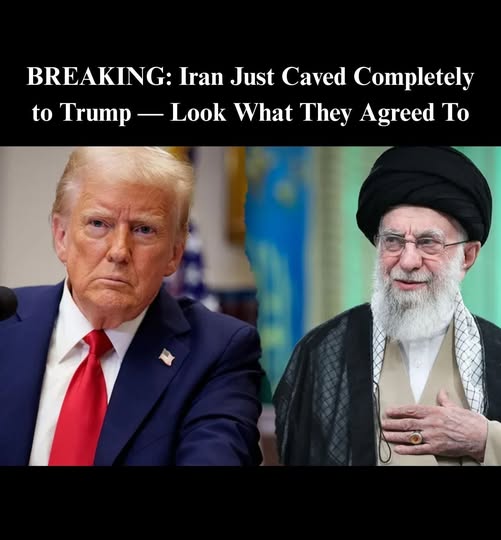
Windows exploded across Tehran as shockwaves rippled through the capital and the night sky glowed with fire. Apartment blocks trembled, sirens wailed without pause, and pillars of smoke twisted upward from military compounds and government districts alike. Warships were reported sinking in coastal waters, missiles streaked across borders, and Iran’s supreme leader was assassinated in what officials described as a coordinated decapitation strike. All of it unfolded while Washington, in striking contrast, quietly weighed the possibility of “talks” with whoever might emerge to lead what remains of Iran’s fractured power structure. Even as B-2 bombers thundered overhead and militias struck U.S. positions abroad, President Trump signaled openness to negotiations. Allies hesitated, battle lines multiplied, and a stunned world seemed to hold its breath, unsure whether it was witnessing the beginning of the end—or the end of the beginning.
The killing of Ayatollah Khamenei marked a seismic rupture in the Middle East’s balance of power. The strike, described by analysts as both surgical and symbolic, aimed not only to eliminate a leader but to shatter the command architecture that had defined Iran’s regional posture for decades. In the immediate aftermath, U.S. B-2 stealth bombers cratered ballistic missile facilities deep inside Iranian territory, targeting launch silos and underground storage depots believed to house long-range systems. Israeli fighter jets roared across contested airspace, hunting mobile missile launchers and air-defense batteries in an effort to prevent retaliation. Reports circulated that nine Iranian warships had been sunk in coordinated naval engagements, sending plumes of black smoke over strategic waterways and signaling that the confrontation had expanded far beyond isolated strikes.
Tehran itself bore the visible scars. Entire neighborhoods rattled as blast waves shattered glass and ignited fires that burned into the early morning. Casualty figures climbed steadily, with early estimates placing the dead and wounded in the hundreds. Hospitals struggled under the surge, emergency crews worked through debris, and state media alternated between vows of revenge and calls for unity. Yet amid the thunder of bombardment, another narrative quietly emerged. Unnamed U.S. officials began referencing “new potential leadership” inside Iran—figures who, they claimed, had sent signals through back channels expressing a willingness to explore dialogue. President Trump later confirmed publicly that he had agreed to speak with such representatives, framing the moment as both a show of strength and an opportunity for recalibration.
This juxtaposition—intense military escalation alongside tentative diplomatic outreach—has created an atmosphere of profound uncertainty. On one hand, the strikes represent one of the most forceful Western actions against Iran in modern history. On the other, Washington’s suggestion that talks remain possible hints at an awareness of the risks inherent in prolonged war. Critics argue that negotiating while bombs still fall could project mixed signals; supporters contend it reflects pragmatic statecraft designed to prevent even greater catastrophe. For now, the contradiction stands: devastation on the ground paired with cautious overtures behind closed doors.
Beyond Iran’s borders, the crisis has already begun to metastasize. Iran-backed militias in Iraq and Lebanon launched rockets and drones toward Israeli territory and U.S. installations, widening the operational theater. American bases reported incoming fire, and at least four U.S. service members have been confirmed killed in related attacks. Gulf states, wary of being drawn directly into the crossfire, issued warnings that further escalation would provoke retaliation. Britain’s regional facilities came under drone assault, underscoring how quickly the conflict is radiating outward. What began as a targeted strike now threatens to entangle multiple nations in a cascading cycle of action and response.
Civilian centers have not been spared the psychological impact. Synagogues and urban districts in Israel reported damage from missile strikes, heightening fears of sectarian violence and reprisals. European governments, alarmed by the speed of escalation, convened emergency sessions to assess security risks and potential involvement. Intelligence agencies across the continent have elevated threat levels, concerned that retaliatory networks could expand beyond the Middle East. The possibility of NATO consultation looms, though no formal decision has been announced. Each new development adds another layer of volatility to an already combustible situation.
At sea, the reported sinking of Iranian warships has shifted naval dynamics in the Gulf and surrounding waters. Shipping lanes face heightened scrutiny, insurance rates have surged, and global energy markets react nervously to the prospect of prolonged instability. Military analysts note that maritime losses of this scale could significantly degrade Iran’s conventional deterrent capacity, yet they also warn that asymmetric responses—cyber operations, proxy attacks, or unconventional strikes—may intensify as a result. The battlefield is no longer confined to airstrips and missile silos; it now spans digital networks, economic corridors, and ideological fault lines.
Meanwhile, diplomatic channels remain active, albeit quietly. Regional mediators are reportedly attempting to establish contact points between surviving Iranian officials and Western representatives. The core question is whether a fragmented leadership in Tehran can consolidate authority quickly enough to negotiate credibly—or whether internal power struggles will deepen the chaos. The assassination of a supreme leader creates not just a military vacuum, but a political and theological one. How that vacuum is filled may determine whether the current confrontation stabilizes or spirals further.
In Washington, debates intensify over strategy and endgame. Some policymakers argue that the strikes have delivered a decisive blow and created leverage for negotiations from a position of strength. Others caution that decapitation tactics historically carry unpredictable consequences, especially in systems where authority is deeply intertwined with ideology and security networks. Public messaging oscillates between triumph and caution, reflecting a broader uncertainty about what success now looks like.
For ordinary citizens across the region, however, the calculus is simpler and more immediate: survival. Families in Tehran sift through shattered glass; communities in Israel brace for incoming alerts; soldiers on distant bases prepare for the next siren. Markets fluctuate, flights are rerouted, and humanitarian agencies ready contingency plans for potential displacement. The human cost continues to mount even as leaders debate geopolitical frameworks.
The world now stands at a precarious crossroads. Between airstrikes and secret diplomacy, retaliation and restraint, the trajectory remains unsettled. Will back-channel discussions produce a fragile cease-fire that halts the cascade? Or will proxy attacks and reprisals widen the map of destruction? As smoke lingers over Tehran and naval wreckage sinks beneath darkened waters, one truth is unmistakable: this confrontation has already reshaped the region. Whether it concludes in negotiation or expands into a far broader war may depend on decisions being made in rooms far quieter than the skies now lit by fire.