
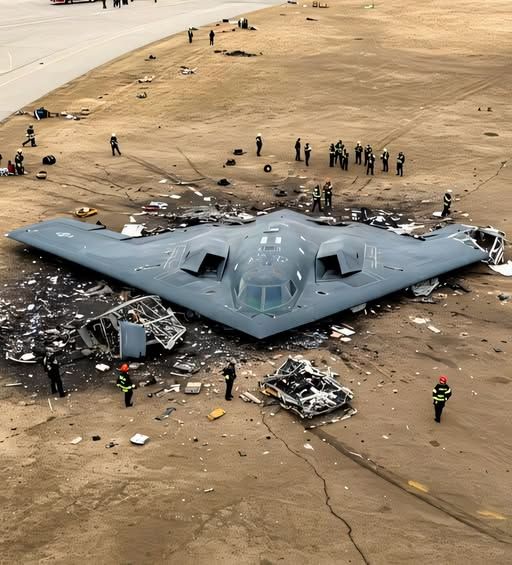
The B-2 Spirit, often called the pinnacle of stealth aviation, has long captured the imagination of military enthusiasts, aviation experts, and the general public alike. Since its introduction in the 1990s, the aircraft has stood out for its unique flying wing design, near-invisibility to radar, and capability to deliver precision strikes anywhere in the world. Despite its storied history and operational deployment, there has never been a confirmed instance of the B-2 being shot down in combat.
Nevertheless, several crashes involving the B-2 Spirit have occurred over the years, but these incidents have always been attributed to technical malfunctions or accidents, never hostile fire. Understanding these events—and why the B-2 is so difficult to shoot down—offers insight into the complexities of modern aerial warfare and the advanced technology embedded in this remarkable aircraft.
Documented B-2 Spirit Crashes
While the B-2 has never fallen to enemy action, there have been two widely reported crashes involving the aircraft. Each incident provides valuable lessons about the vulnerabilities inherent even in the most sophisticated military platforms.
Andersen Air Force Base, Guam – February 23, 2008
Crew: Two pilots, both ejected safely
Cause: Moisture infiltrated the aircraft’s air data sensors, providing inaccurate readings to the flight control system
Incident Details: During takeoff, the compromised sensors caused the aircraft to rotate prematurely, leading to an aerodynamic stall. The plane crashed shortly after liftoff.
Outcome: The B-2 was a total loss, valued at approximately $1.4 billion. The Air Force determined the cause was a technical failure, not pilot error.
Significance: This crash marked the first loss of a B-2 Spirit since its operational debut in the 1990s, highlighting the extreme costs and operational risks associated with flying cutting-edge stealth aircraft.
Whiteman Air Force Base, Missouri – September 14, 2021
Crew: No injuries reported
Cause: Details of this crash are limited, but investigations indicate it was not caused by hostile action
Incident Details: The aircraft sustained damage during landing, prompting a review of procedural and technical protocols.
Outcome: The Air Force reaffirmed that no enemy engagement was involved.
These incidents underscore a key point: the B-2 has never been destroyed by an adversary, and its operational failures have always been tied to mechanical or technical challenges rather than combat loss.
Why the B-2 Spirit is Nearly Impossible to Shoot Down
The resilience of the B-2 is not coincidental. Every aspect of its design and operation is intended to minimize detectability and maximize survivability in hostile environments. Here are the primary factors that make it one of the most elusive aircraft ever built.
1. Stealth Design and Radar-Absorbing Materials
The B-2 features a flying wing configuration, eliminating vertical stabilizers and other protrusions that typically reflect radar signals.
The aircraft is coated with radar-absorbing materials (RAM), which absorb or scatter radar waves, drastically reducing its radar signature.
Its radar cross-section (RCS) is roughly the size of a small bird, making it extremely difficult for older radar systems—and even many modern radars—to detect.
2. Low Infrared (IR) Signature
The engines are embedded within the wing structure, minimizing visible heat emissions.
This design makes it difficult for infrared-guided surface-to-air missiles (SAMs) to acquire and track the aircraft.
Reducing the IR footprint is critical for operating in regions equipped with advanced thermal detection systems.
3. High-Altitude Operations
The B-2 is capable of operating at very high altitudes, often above the effective range of most ground-based air defense systems.
Its ceiling allows it to remain outside the envelope of many missile threats, reducing risk during penetration missions over hostile territory.
4. Advanced Electronic Countermeasures
The Spirit is equipped with state-of-the-art electronic warfare (EW) systems.
These systems can jam or spoof enemy radar, making it appear invisible or misleading targeting systems entirely.
Electronic countermeasures provide a layered defense, complementing the aircraft’s physical stealth features.
5. Meticulous Mission Planning
No B-2 flight is undertaken without comprehensive planning.
Satellites, intelligence assets, and threat modeling inform every mission, allowing the aircraft to navigate around known air defense systems.
Flight paths are analyzed to minimize exposure to radar and missile threats, ensuring maximum operational safety.
Lessons from B-2 Crashes
Even though no B-2 has been shot down, the crash incidents demonstrate several important lessons:
Even advanced technology is not infallible: The 2008 crash at Guam highlighted that sensor failures and software dependencies can lead to catastrophic results, even with the most sophisticated aircraft.
Pilot skill remains essential: While automation assists with complex operations, trained pilots are critical for executing evasive maneuvers and responding to anomalies.
Maintenance and environmental factors matter: Moisture, temperature, and other external conditions can directly affect onboard systems, underscoring the importance of rigorous maintenance protocols.
Cost of operational risk: Each B-2 is valued over $1 billion, meaning even minor incidents have enormous financial and strategic implications.
How the B-2 Shapes Modern Military Strategy
The capabilities of the B-2 have influenced global airpower strategy in several ways:
Strategic Deterrence
Its stealth allows it to penetrate highly defended airspace without alerting enemy radar.
This capability provides a credible deterrent against potential aggressors, demonstrating the United States’ ability to project power anywhere in the world.
Precision Strikes
The B-2 can carry conventional and nuclear payloads with extreme precision.
Its ability to operate undetected allows for high-value target engagement while minimizing collateral damage.
Psychological Impact
The sheer mystique and operational secrecy surrounding the B-2 act as a psychological deterrent.
Adversaries must account for the possibility of undetectable strikes, influencing regional military planning.
The Future of Stealth Aviation
The B-2’s legacy informs the development of next-generation stealth aircraft, including the B-21 Raider. Lessons learned from past crashes, mission planning, and operational deployment shape:
Advanced sensor integration to reduce the likelihood of technical failures
Improved electronic warfare systems to counter increasingly sophisticated air defenses
Enhanced pilot training programs that simulate diverse threat environments
Operational protocols to mitigate environmental and mechanical risks
As technology evolves, future stealth bombers will build upon the B-2’s unique combination of invisibility, firepower, and survivability.
Conclusion
The B-2 Spirit remains one of the most iconic and resilient aircraft in modern aviation history. Despite a few high-profile crashes caused by technical failures, there is no verified case of the aircraft being shot down in combat. Its stealth design, low radar and infrared signatures, high-altitude capabilities, advanced electronic countermeasures, and meticulous mission planning make it a formidable instrument of military power.
Understanding the B-2’s operational history, design features, and strategic impact provides insight into why it remains nearly untouchable, even in highly contested airspaces. This aircraft continues to set the standard for stealth aviation and serves as a testament to the ingenuity of modern aerospace engineering.
Even as the military looks toward next-generation stealth platforms, the B-2 Spirit will remain a benchmark for survivability, technological sophistication, and the art of modern aerial warfare for decades to come.