
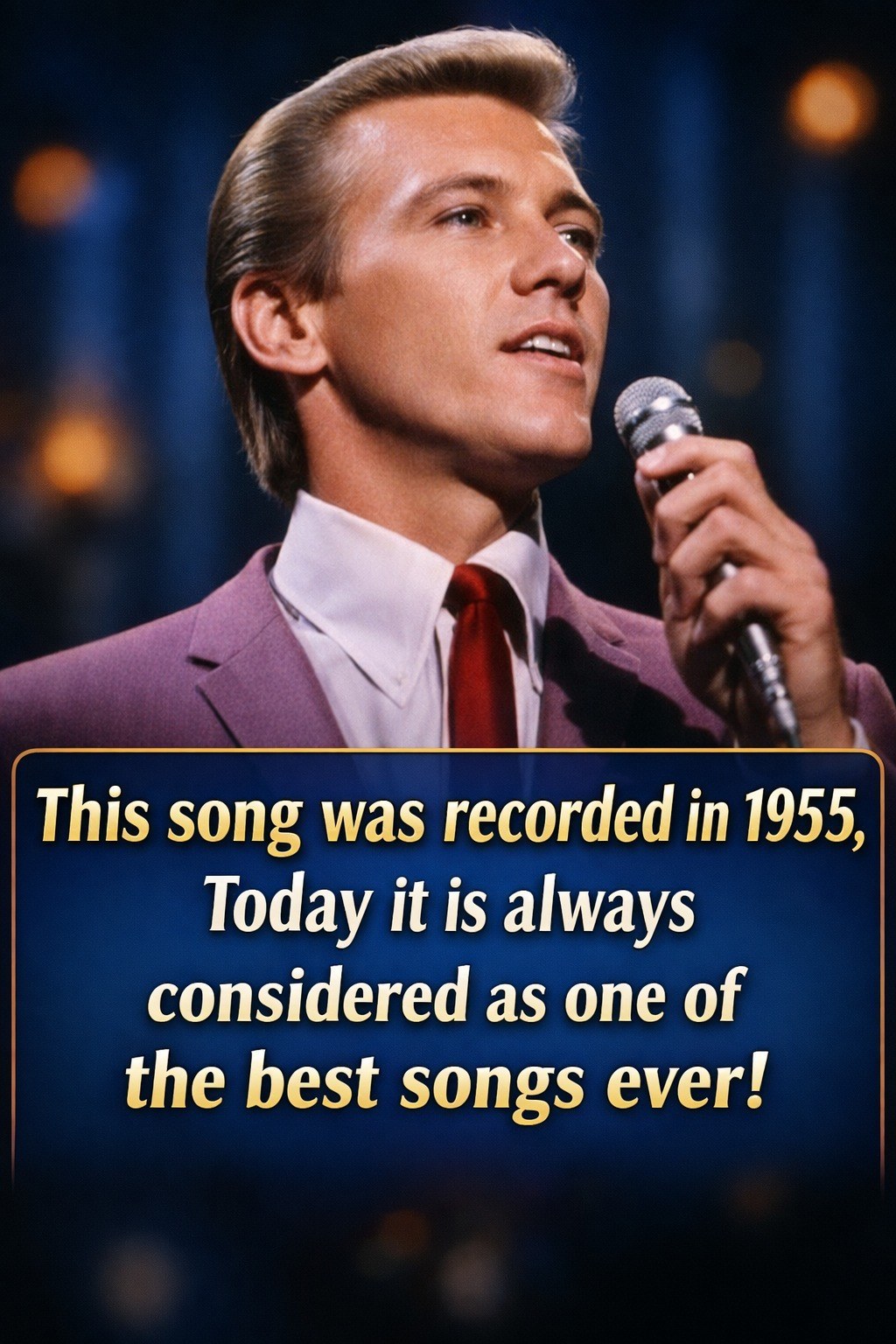
Some songs don’t just become hits — they become cultural touchstones, woven into the emotional fabric of generations.
One such song originated not as a standalone single, but as a piece of cinematic score in a modest film from the 1950s.
Decades later, it would transcend its origins, becoming one of the most recorded and deeply cherished melodies of all time — associated with love, longing, heartache, and some of the most iconic moments in popular culture.
That song is “Unchained Melody,” written in 1955 by composer Alex North and lyricist Hy Zaret. Though the film for which it was composed has largely faded into history, the song itself has not only endured — it has grown in emotional significance across generations and across genres.
A Humble Beginning: From a Prison Movie to a Melodic Heartbeat
“Unchained Melody” was originally written as part of the soundtrack for the 1955 prison film Unchained. Alex North, a respected composer with a long career in film music, had been contracted to create the score for the movie.
Though the film itself was not a major box‑office success or lasting cinematic classic, North brought an older musical idea he had been developing into the project and soon teamed up with lyricist Hy Zaret to turn it into something truly special.
Interestingly, the song’s title, Unchained Melody, suggests liberation, but the lyrics never actually use the word “unchained.”
Zaret reportedly resisted inserting the word into the text, choosing instead to write from the perspective of someone longing for a loved one from whom they were painfully separated — a theme that would prove universal and timeless.
Within the context of the film, the song underscores the emotional conflict of a prisoner contemplating whether to escape and live life on the run or to serve his sentence and return to his family.
The melody’s sense of yearning and the lyrics’ sincere plea for reconnection gave the song an emotional depth that outgrew the film’s modest place in cinematic history.
In the movie, the song was performed by Todd Duncan, who sings a shortened version as part of the soundtrack.
Though the film was nominated for the Academy Award for Best Original Song in 1956, it ultimately lost to Love Is a Many‑Splendored Thing, another classic of its era.
Early Recordings and Immediate Impact
Almost immediately after its composition, “Unchained Melody” began to take on a life of its own outside of Unchained.
In 1955 alone, multiple artists released their own versions of the song, and astonishingly, three different interpretations — by Les Baxter, Al Hibbler, and Roy Hamilton — all reached the Top 10 on the Billboard charts in the United States.
In the United Kingdom, four separate versions of the song appeared simultaneously in the Top 20 — a rare achievement for any song at any time.
This early explosion of distinct recordings demonstrated something remarkable: even before becoming identified with any one performer, the song’s emotional resonance was undeniable. Its broad appeal cut across genres and audiences, with instrumental, vocal, and orchestral versions all receiving attention.
The Righteous Brothers Make It Their Own
Despite the success of these early versions, it wasn’t until 1965 that “Unchained Melody” truly became cemented as a classic in the public consciousness — and this was due to one specific interpretation that elevated it from popular song to cultural icon.
That version was recorded by The Righteous Brothers, an American musical duo consisting of Bobby Hatfield and Bill Medley.
Though The Righteous Brothers had already seen significant success with tracks like You’ve Lost That Lovin’ Feeling, their rendition of Unchained Melody became something entirely different.
Bobby Hatfield’s soaring tenor voice carries the song’s longing and emotion with an intensity that resonated deeply with listeners. His passionate performance, especially in the climactic high notes of the final verse, transformed the song into a powerful ballad of love and yearning that felt timeless.
Interestingly, the recording was not initially intended to be the centerpiece of a major album or single release. It was originally released on the B‑side of another track, yet DJs and listeners gravitated to it immediately.
The version reached No. 4 on the Billboard charts in the United States by late 1965, and in the years that followed it became one of the most frequently requested jukebox selections across the country.
Over the decades since its release, Unchained Melody has been recorded thousands of times by a remarkable range of artists — more than 1,500 recordings by over 670 performers worldwide, spanning genres, languages, and cultural contexts.
This extraordinary breadth of interpretation is a testament to its universal emotional power.
A New Era: Ghost and a Film’s Emotional Legacy
While The Righteous Brothers’ 1965 recording had already turned the song into a beloved classic, it achieved a second, even greater surge of popularity decades later when it was featured prominently in the 1990 blockbuster film Ghost.
In Ghost, a romantic fantasy drama starring Patrick Swayze and Demi Moore, Unchained Melody plays during one of the most iconic scenes in modern film history: the pottery wheel scene.
In this moment, Swayze’s character, Sam, and Moore’s character, Molly, share a deeply intimate and tender experience in a moment of emotional vulnerability and connection.
The song’s haunting, passionate build — its themes of longing and eternal love — perfectly underscored the scene, creating a synergy that audiences remembered forever.
Following the release of Ghost, the original Righteous Brothers recording was reissued and climbed back onto the charts. In 1990 alone, it reached audiences in countries around the world, including the United Kingdom, where it spent four weeks at No. 1 and became one of that year’s top‑selling singles.
In the United States, both the original 1965 version and a newly recorded 1990 version appeared simultaneously on the charts — a rare achievement.
The song re‑entered the Billboard Hot 100, showing just how powerful its emotional connection with listeners remained more than three decades after it was first recorded.
The renewed popularity did not go unnoticed by the music industry. Unchained Melody earned a Grammy Award nomination in 1991 for its re‑recorded version, and the original recording was later inducted into the Grammy Hall of Fame in 2000 as a landmark achievement in popular music.
Why the Song Resonates Across Generations
There are many reasons Unchained Melody remains beloved across decades, even as countless other songs fade with time. Its endurance speaks to something essential about both its composition and its emotional core.
Universal Themes of Love and Longing
At the heart of the song are emotions that transcend age, culture, and era. Whether heard as a young lover’s declaration, a heartfelt tribute at a wedding, or a poignant reminder of separation, its lyrics capture a feeling that nearly everyone experiences at some point: the ache of missing someone deeply.
The words paint a picture of yearning and hope — of waiting for the day when time no longer feels slow and distance no longer hurts.
That universality is part of what makes the song so relatable, and why so many performers have felt compelled to put their own heartfelt stamp on it.
A Melody That Transcends Simplicity
Musically, Unchained Melody is deceptively simple — a soaring ballad structured around a strong, memorable tune. Yet beneath that simplicity lies a harmonic richness, with subtle shifts that give it a sense of emotional lift and release.
In the bridge and final verse, listeners can feel the emotional build toward catharsis; it’s a sound that pulls at the heartstrings because it mirrors the human experience of longing and release.
Legendary Interpretations That Redefined It
The Righteous Brothers’ version remains the most iconic for a reason: Bobby Hatfield’s soaring vocal performance gives the song an unmistakable emotional intensity.
His ascent into the high notes at the climax of the song feels like a musical manifestation of yearning itself.
But beyond that, the sheer number of artists who have chosen to record the song — from early 1950s vocalists and big bands to contemporary pop and classical performers — showcases its flexibility and enduring relevance.
Each new interpretation brings fresh emotional context, keeping the song alive in new settings and eras.
Cultural Impact and Recognition
Over the years, Unchained Melody has acquired accolades that underscore its cultural importance.
In addition to its Grammy Hall of Fame induction, the Songwriters Hall of Fame honored it as a “Towering Song,” highlighting its lasting influence on music and culture.
The song has achieved other remarkable distinctions as well. For many years, it was the only song to reach No. 1 in the United Kingdom with four different recordings by different artists — a rare achievement that speaks to its broad, cross‑decade appeal.
And its association with Ghost — a film that remains deeply loved more than three decades after its release — ensured that new generations continue to discover and cherish the song in contexts far removed from its original cinematic roots.
A Song That Continues to Live On
More than six decades after its creation, Unchained Melody has become much more than a film soundtrack or a hit single.
It is a living piece of musical history — a melody that has been interpreted, reimagined, and felt by millions around the world. It lives in wedding ceremonies, romantic dedications, movie soundtracks, and personal playlists.
It has been sung by legendary artists such as Elvis Presley and countless others, and it continues to be discovered by new listeners who feel its emotional pull long after the first note fades.
In the end, what makes Unchained Melody timeless is not its chart performance or its association with iconic films — it is its ability to touch the human heart.
In every note, every lyric, and every breath of emotion, the song captures something essential about love and longing. That’s why, even decades after it was first recorded, it still resonates with listeners of all ages and backgrounds.
In the world of music, some songs remain beloved simply because they are good. A rare few, like Unchained Melody, endure because they feel like a part of life itself — echoing universal emotions that never truly fade.
Some songs don’t just become hits — they become cultural touchstones, woven into the emotional fabric of generations.
One such song originated not as a standalone single, but as a piece of cinematic score in a modest film from the 1950s.
Decades later, it would transcend its origins, becoming one of the most recorded and deeply cherished melodies of all time — associated with love, longing, heartache, and some of the most iconic moments in popular culture.
That song is “Unchained Melody,” written in 1955 by composer Alex North and lyricist Hy Zaret. Though the film for which it was composed has largely faded into history, the song itself has not only endured — it has grown in emotional significance across generations and across genres.
A Humble Beginning: From a Prison Movie to a Melodic Heartbeat
“Unchained Melody” was originally written as part of the soundtrack for the 1955 prison film Unchained. Alex North, a respected composer with a long career in film music, had been contracted to create the score for the movie.
Though the film itself was not a major box‑office success or lasting cinematic classic, North brought an older musical idea he had been developing into the project and soon teamed up with lyricist Hy Zaret to turn it into something truly special.
Interestingly, the song’s title, Unchained Melody, suggests liberation, but the lyrics never actually use the word “unchained.”
Zaret reportedly resisted inserting the word into the text, choosing instead to write from the perspective of someone longing for a loved one from whom they were painfully separated — a theme that would prove universal and timeless.
Within the context of the film, the song underscores the emotional conflict of a prisoner contemplating whether to escape and live life on the run or to serve his sentence and return to his family.
The melody’s sense of yearning and the lyrics’ sincere plea for reconnection gave the song an emotional depth that outgrew the film’s modest place in cinematic history.
In the movie, the song was performed by Todd Duncan, who sings a shortened version as part of the soundtrack.
Though the film was nominated for the Academy Award for Best Original Song in 1956, it ultimately lost to Love Is a Many‑Splendored Thing, another classic of its era.
Early Recordings and Immediate Impact
Almost immediately after its composition, “Unchained Melody” began to take on a life of its own outside of Unchained.
In 1955 alone, multiple artists released their own versions of the song, and astonishingly, three different interpretations — by Les Baxter, Al Hibbler, and Roy Hamilton — all reached the Top 10 on the Billboard charts in the United States.
In the United Kingdom, four separate versions of the song appeared simultaneously in the Top 20 — a rare achievement for any song at any time.
This early explosion of distinct recordings demonstrated something remarkable: even before becoming identified with any one performer, the song’s emotional resonance was undeniable. Its broad appeal cut across genres and audiences, with instrumental, vocal, and orchestral versions all receiving attention.
The Righteous Brothers Make It Their Own
Despite the success of these early versions, it wasn’t until 1965 that “Unchained Melody” truly became cemented as a classic in the public consciousness — and this was due to one specific interpretation that elevated it from popular song to cultural icon.
That version was recorded by The Righteous Brothers, an American musical duo consisting of Bobby Hatfield and Bill Medley.
Though The Righteous Brothers had already seen significant success with tracks like You’ve Lost That Lovin’ Feeling, their rendition of Unchained Melody became something entirely different.
Bobby Hatfield’s soaring tenor voice carries the song’s longing and emotion with an intensity that resonated deeply with listeners. His passionate performance, especially in the climactic high notes of the final verse, transformed the song into a powerful ballad of love and yearning that felt timeless.
Interestingly, the recording was not initially intended to be the centerpiece of a major album or single release. It was originally released on the B‑side of another track, yet DJs and listeners gravitated to it immediately.
The version reached No. 4 on the Billboard charts in the United States by late 1965, and in the years that followed it became one of the most frequently requested jukebox selections across the country.
Over the decades since its release, Unchained Melody has been recorded thousands of times by a remarkable range of artists — more than 1,500 recordings by over 670 performers worldwide, spanning genres, languages, and cultural contexts.
This extraordinary breadth of interpretation is a testament to its universal emotional power.
A New Era: Ghost and a Film’s Emotional Legacy
While The Righteous Brothers’ 1965 recording had already turned the song into a beloved classic, it achieved a second, even greater surge of popularity decades later when it was featured prominently in the 1990 blockbuster film Ghost.
In Ghost, a romantic fantasy drama starring Patrick Swayze and Demi Moore, Unchained Melody plays during one of the most iconic scenes in modern film history: the pottery wheel scene.
In this moment, Swayze’s character, Sam, and Moore’s character, Molly, share a deeply intimate and tender experience in a moment of emotional vulnerability and connection.
The song’s haunting, passionate build — its themes of longing and eternal love — perfectly underscored the scene, creating a synergy that audiences remembered forever.
Following the release of Ghost, the original Righteous Brothers recording was reissued and climbed back onto the charts. In 1990 alone, it reached audiences in countries around the world, including the United Kingdom, where it spent four weeks at No. 1 and became one of that year’s top‑selling singles.
In the United States, both the original 1965 version and a newly recorded 1990 version appeared simultaneously on the charts — a rare achievement.
The song re‑entered the Billboard Hot 100, showing just how powerful its emotional connection with listeners remained more than three decades after it was first recorded.
The renewed popularity did not go unnoticed by the music industry. Unchained Melody earned a Grammy Award nomination in 1991 for its re‑recorded version, and the original recording was later inducted into the Grammy Hall of Fame in 2000 as a landmark achievement in popular music.
Why the Song Resonates Across Generations
There are many reasons Unchained Melody remains beloved across decades, even as countless other songs fade with time. Its endurance speaks to something essential about both its composition and its emotional core.
Universal Themes of Love and Longing
At the heart of the song are emotions that transcend age, culture, and era. Whether heard as a young lover’s declaration, a heartfelt tribute at a wedding, or a poignant reminder of separation, its lyrics capture a feeling that nearly everyone experiences at some point: the ache of missing someone deeply.
The words paint a picture of yearning and hope — of waiting for the day when time no longer feels slow and distance no longer hurts.
That universality is part of what makes the song so relatable, and why so many performers have felt compelled to put their own heartfelt stamp on it.
A Melody That Transcends Simplicity
Musically, Unchained Melody is deceptively simple — a soaring ballad structured around a strong, memorable tune. Yet beneath that simplicity lies a harmonic richness, with subtle shifts that give it a sense of emotional lift and release.
In the bridge and final verse, listeners can feel the emotional build toward catharsis; it’s a sound that pulls at the heartstrings because it mirrors the human experience of longing and release.
Legendary Interpretations That Redefined It
The Righteous Brothers’ version remains the most iconic for a reason: Bobby Hatfield’s soaring vocal performance gives the song an unmistakable emotional intensity.
His ascent into the high notes at the climax of the song feels like a musical manifestation of yearning itself.
But beyond that, the sheer number of artists who have chosen to record the song — from early 1950s vocalists and big bands to contemporary pop and classical performers — showcases its flexibility and enduring relevance.
Each new interpretation brings fresh emotional context, keeping the song alive in new settings and eras.
Cultural Impact and Recognition
Over the years, Unchained Melody has acquired accolades that underscore its cultural importance.
In addition to its Grammy Hall of Fame induction, the Songwriters Hall of Fame honored it as a “Towering Song,” highlighting its lasting influence on music and culture.
The song has achieved other remarkable distinctions as well. For many years, it was the only song to reach No. 1 in the United Kingdom with four different recordings by different artists — a rare achievement that speaks to its broad, cross‑decade appeal.
And its association with Ghost — a film that remains deeply loved more than three decades after its release — ensured that new generations continue to discover and cherish the song in contexts far removed from its original cinematic roots.
A Song That Continues to Live On
More than six decades after its creation, Unchained Melody has become much more than a film soundtrack or a hit single.
It is a living piece of musical history — a melody that has been interpreted, reimagined, and felt by millions around the world. It lives in wedding ceremonies, romantic dedications, movie soundtracks, and personal playlists.
It has been sung by legendary artists such as Elvis Presley and countless others, and it continues to be discovered by new listeners who feel its emotional pull long after the first note fades.
In the end, what makes Unchained Melody timeless is not its chart performance or its association with iconic films — it is its ability to touch the human heart.
In every note, every lyric, and every breath of emotion, the song captures something essential about love and longing. That’s why, even decades after it was first recorded, it still resonates with listeners of all ages and backgrounds.
In the world of music, some songs remain beloved simply because they are good. A rare few, like Unchained Melody, endure because they feel like a part of life itself — echoing universal emotions that never truly fade.