
Politics Commentary
December 16, 2025
For more than two decades, Western politics has struggled to talk honestly about Islamist extremism. Since the September 11 attacks, leaders across the political spectrum have insisted on careful phrasing, quick reassurances, and rhetorical firebreaks designed to separate violent extremists from the broader Muslim population. That instinct was understandable — and in many ways necessary — to prevent collective blame and backlash.
But over time, something else happened: the conversation itself became untouchable.
Any attempt to discuss patterns of Islamist violence, ideological motivations, or policy failures was increasingly treated not as a security concern, but as a moral transgression. Raise questions, and you weren’t debating policy — you were accused of bigotry.
From Taboo to Terminology
For years, the default accusation was “Islamophobia.” The word became a rhetorical kill switch. It didn’t matter whether someone was criticizing a specific ideology, a radical cleric, or a terror network. The label was often applied broadly, shutting down debate before it could begin.
But language loses power when it’s overused. As terrorist attacks continued — and as ordinary citizens noticed patterns that leaders seemed unwilling to address — the accusation stopped working the way it once did.
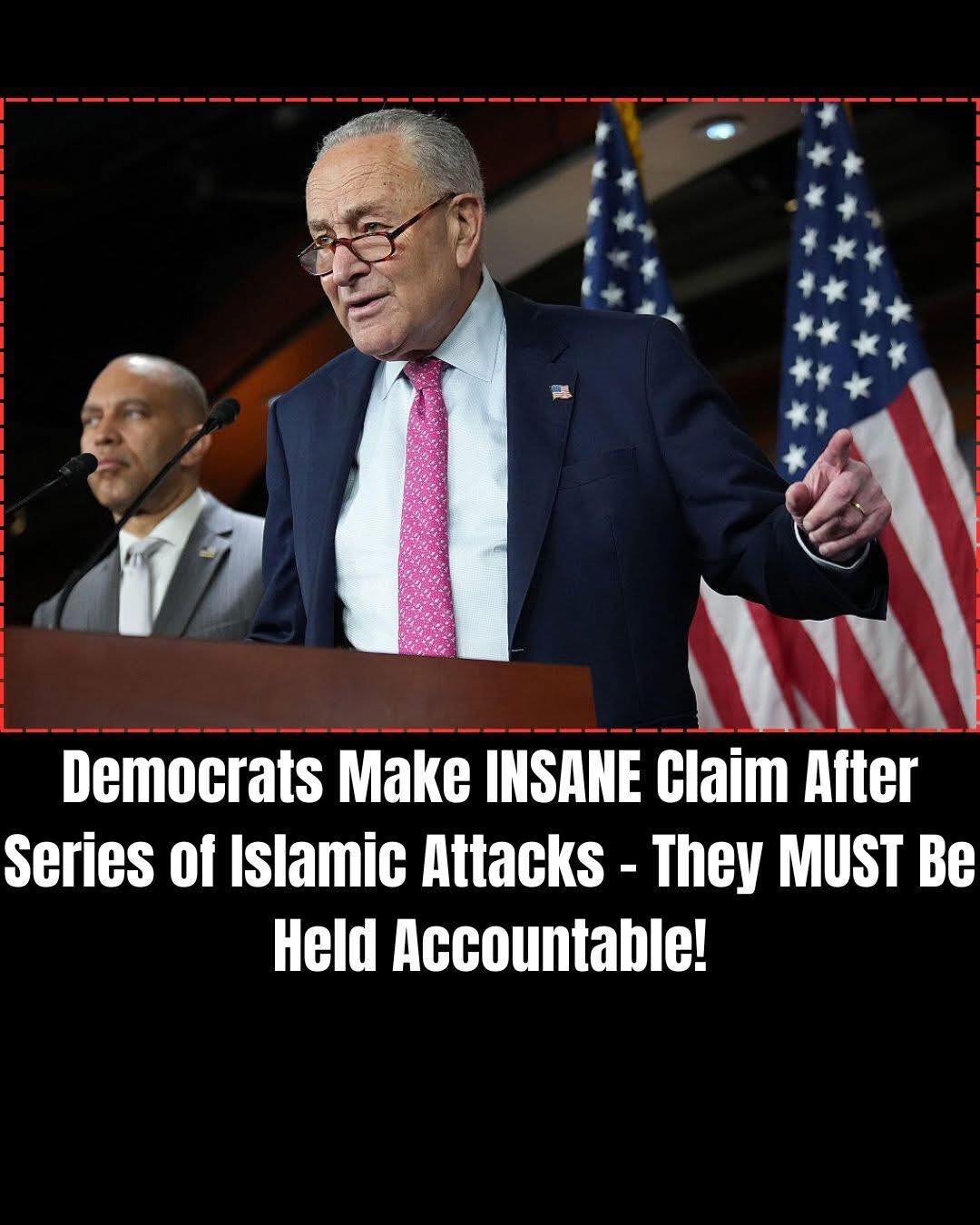
So now, a new term is gaining traction: “anti-Muslim hostility.”
Same function. Softer phrasing. New wrapper.
The shift is already visible in government discussions across Europe and in the UK, where officials are considering definitions of “anti-Muslim hatred” that intentionally avoid the word “Islamophobia.” Supporters argue the goal is to protect individuals without restricting criticism of religion or ideology. Critics worry it’s simply a rebrand — a new way to police speech without resolving the underlying issue.
The Problem People Are Trying to Talk About
Here’s the reality many voters are reacting to: Islamist violence has not disappeared. In some regions, it has intensified.
Across Europe, major public celebrations have been canceled or scaled back due to credible terror threats. Authorities in Germany, France, and elsewhere have arrested suspects linked to extremist networks planning mass-casualty attacks. These are not fringe incidents. They are part of an ongoing security challenge that governments themselves acknowledge — even if political messaging often downplays it.
And when violence erupts, the public notices.
Recently, an ISIS-inspired attack targeted a public religious gathering in Sydney, killing civilians and injuring dozens. The victims included families, elderly attendees, and survivors of past atrocities. It was a brutal reminder that extremist violence does not respect borders, faiths, or innocence.
The question many citizens are asking is not hateful — it’s practical:
Why does this keep happening, and why are we discouraged from discussing it honestly?
Criticism vs. Collective Blame
There is a crucial distinction that gets lost in heated rhetoric.
Criticizing Islamist extremism is not the same as attacking Muslims.
Millions of Muslims live peacefully in Western democracies, oppose terrorism, and are often its victims. Conflating them with extremists is wrong and dangerous. But pretending ideology plays no role at all is also intellectually dishonest.
Extremist movements don’t emerge in a vacuum. They recruit, indoctrinate, and justify violence using specific interpretations of religious texts and political grievances. Acknowledging that reality is not hatred — it’s analysis.
When governments or media figures treat any discussion of ideology as inherently suspect, they leave the public with two bad options: silence or backlash.
Why the Language Is Changing
As more people refuse to self-censor, the political response has shifted. Instead of addressing the substance of concerns — border policy, asylum screening, radicalization prevention, foreign funding of extremist networks — the focus has moved back to language control.
The introduction of “anti-Muslim hostility” as a preferred term is part of that strategy. Proponents say it protects individuals from discrimination. Critics argue it risks being used to chill debate about religion, culture, and security.
Free-speech advocates warn that poorly defined standards can discourage legitimate criticism, even when it targets ideas rather than people.
That tension is now front and center.
What Voters Are Really Reacting To
This isn’t about hatred. It’s about trust.
When citizens see repeated attacks, canceled events, armed police patrols, and emergency alerts — and are then told the problem is mostly their perception — confidence erodes.
People don’t want slogans. They want clarity.
They want leaders who can say, without euphemism or accusation:
- Extremist ideology exists.
- It can be confronted without demonizing peaceful communities.
- Security and free speech are not enemies.
A Debate That Isn’t Going Away
Renaming the accusation doesn’t solve the problem. It just delays the conversation.
Whether the term is “Islamophobia” or “anti-Muslim hostility,” the underlying issue remains: how democracies confront violent extremism while preserving pluralism and free expression.
That debate is uncomfortable — but avoiding it has consequences.
As voters become less willing to accept rhetorical deflection, political language will continue to evolve. The question is whether policy will evolve with it — or whether leaders will keep reaching for new labels instead of new solutions.
Because at some point, people stop asking permission to notice what’s happening around them.
And when that happens, changing the name won’t change the reality.