
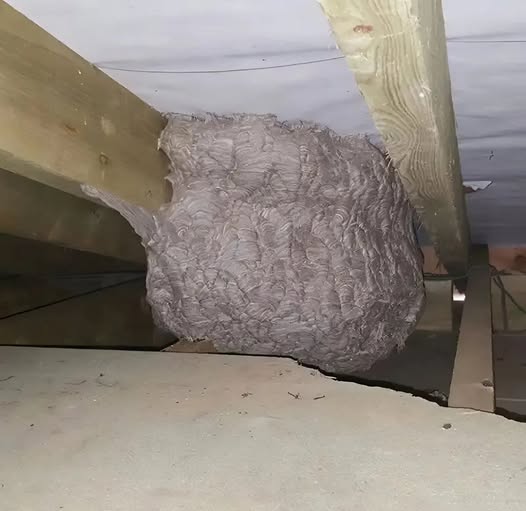
In the rolling hills of Finistère, in Brittany, Denis Jaffré had built a quiet second life after years at sea. A former sailor, he found peace as a beekeeper, guided by the steady rhythm of nature and the hum of his hives. That peace was shattered in 2017 when an invasive predator—the Asian hornet—began attacking his bees. Within months, half of his colonies were destroyed. The loss was devastating, not only financially but emotionally. Each hive represented care, patience, and life, and watching them disappear left Denis facing the possibility of giving up the work that had given him purpose.
Rather than surrendering to frustration, Denis chose curiosity. Determined to protect his remaining hives without harming the surrounding ecosystem, he began experimenting at home, building crude prototypes from wood scraps, jars, and fabric. Many attempts failed. Some traps caught the wrong insects; others didn’t work at all. But Denis persisted, refining his idea until he created a design that was both simple and precise. His final trap used natural bait to attract hornets into a fabric-covered chamber with narrow entry cones—large enough for the invasive species, yet too small for bees and butterflies. Once inside, the hornets could not escape, while pollinators remained safe.
The results were immediate and striking. Denis’s hives began to recover, and word of his invention spread. In 2019, his work earned recognition at the Lépine Competition, one of France’s oldest innovation fairs, transforming a personal solution into a model for ecological protection. Encouraged by the response, Denis founded Jabeprode in 2021, a small company grounded in local craftsmanship and environmental responsibility. What began in his living room grew into a workshop in Bodilis, where a small team now assembles the traps by hand. Within a few years, the design was adopted by beekeepers across 18 European countries, praised for addressing a serious problem without creating new harm.
Today, Denis’s mission goes beyond production. He advocates for responsible, non-toxic approaches to hornet control and works to educate communities about protecting biodiversity. His invention has helped save thousands of bee colonies and restored balance in areas once overwhelmed by invasive predators. Despite growing recognition, Denis remains humble, measuring success not in numbers but in the return of healthy hives. “Bees teach cooperation and patience,” he often says. From a moment of loss, he created a solution rooted in respect for nature—a reminder that innovation guided by care can turn destruction into renewal, and that even a single idea, patiently developed, can help life flourish again.