
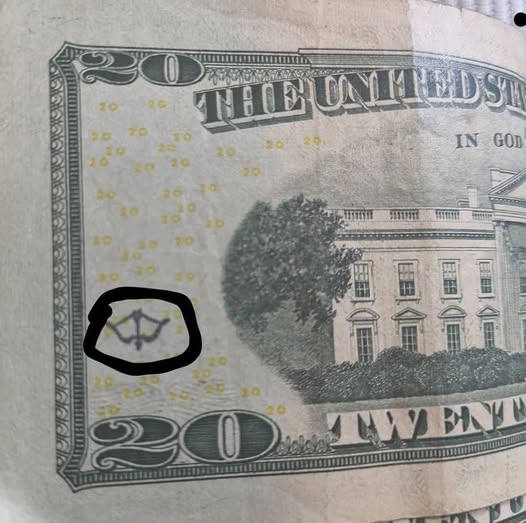
Have you ever noticed a U.S. dollar bill with small stamps, symbols, or inked markings that seem unusual or out of place? At first glance, these markings can look mysterious or even suspicious, but they often represent a fascinating part of the bill’s history. These marks are commonly called chop marks, and they are not random graffiti or damage. Instead, they are stamps added by money handlers, traders, or currency exchangers to show that the bill has been checked and accepted as genuine. Each mark quietly records a stop along the bill’s journey through different hands and locations.
Chop marks are most often found on U.S. dollar bills circulating outside the United States. In many parts of Asia, Africa, and Latin America, the U.S. dollar is widely used alongside local currencies because of its global reputation for stability. The practice itself has deep historical roots. In China, for example, merchants centuries ago stamped silver coins after verifying their weight and purity. This method created trust in busy trade environments where formal banking systems were limited. As paper money became more common, the same concept was naturally extended to banknotes, including the U.S. dollar.
For money changers and traders, chop marks serve several practical purposes. First, they signal to the next person that the bill has already been inspected and deemed authentic. This saves time and reduces disputes during transactions. Second, the marks help build trust in regions where advanced counterfeit-detection tools may not always be available. Finally, they can help track the movement of cash within local trading networks. The stamps are usually small and placed carefully so they do not cover important security features, serial numbers, or portraits, ensuring the bill remains usable.
From a legal and practical standpoint, lightly marked bills generally remain valid currency. U.S. regulations discourage intentional defacement, but chop marks are usually seen as normal wear from circulation rather than damage. That said, bills with excessive markings may sometimes be rejected by vending machines or questioned by banks that prefer cleaner notes. For collectors and curious holders, however, a chop-marked bill offers something extra: a tangible reminder of how money moves across borders. When you come across one of these bills, you are not just holding cash—you are holding a small piece of global economic history shaped by trade, trust, and human connection.